NEWS/BLOG

Welcome to Our Blog

Please use the links to the right to check out firm news and more information relating to these specific areas of law. Happy reading and please contact us if you have any questions that we can help answer.


Donald Trump & The Supreme Court – Part I

Brad Hewett

trump

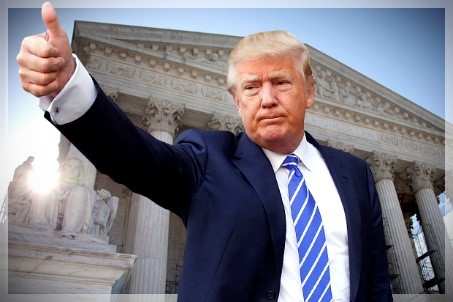
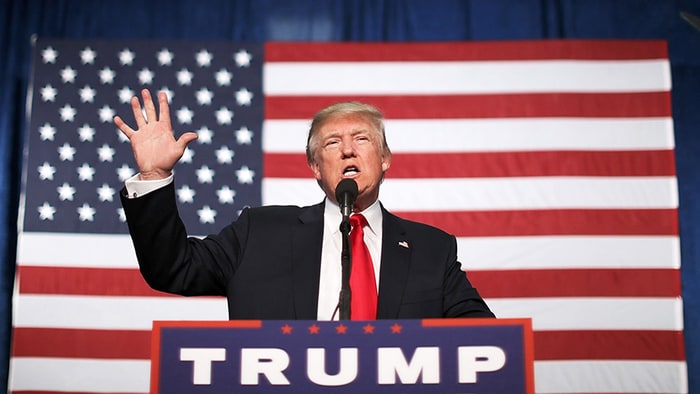
Donald Trump was elected and will take office as the 45th President in a few weeks. You may need to re-read that sentence and make sure you aren’t dreaming, or having a nightmare, depending on your politics of course. I’ll avoid jumping in the mud and state obviously enough that we all have our musings on Trump’s personality, celebrity, campaign, tweets, wife, hair, enterprises, and upcoming administration. While each facet of the Donald is worthy of its own discussion (Trump was ranked 8th on Google’s top 10 trending list of 2016, notably behind Prince and Pokemon Go), this entry is geared toward Trump’s replacement of Supreme Court Justice Antonin Scalia, who passed away on February 13, 2016.

Although the Trump administration has promised measures that will have extensive economic and international consequences, such as the repeal of the Affordable Care Act and steep tariffs on imported goods, his Supreme Court nomination could be the most important decision of his administration.

Why is Trump’s Supreme Court nomination so important? First, the average length of service for non-incumbent Supreme Court justices is 16.7 years, meaning it is likely that whomever Trump appoints will be on the bench long after he vacates office. While Manhattan gastroenterologist Dr. Harold Bornstein trumpeted that Donald Trump “will be the healthiest individual ever elected to the presidency” and that Trump’s “strength and physical stamina are extraordinary”, Trump’s nominee (or even nominees) may still be on the bench even after he has gone on to the Trump Tower in the sky.

Second, the Supreme Court rules on a wide array of issues that affect us all, i.e. abortion, marriage, healthcare, religious freedom, etc. For many, there is a misunderstanding, or even indifference, of how important Trump’s decision on the nomination really may be, and the impact it could have on the United States for years to come.

If you are curious as to how the nomination process1 works, or just looking to hone your trivia skills, then read on my friends. Under Article II of the Constitution, the President will use his sole power to nominate a candidate who is well-qualified, and likely serves his political interests. The President will refer the nominee to the Senate Judiciary Committee, made up of twenty Senators, which will check the nominee’s credentials and background.

The Senate Judiciary Committee holds the first hearing for the nominee and questions his or her qualifications. Witnesses that support and oppose the nominee present testimony to the Senate Judiciary Committee and the nominee is provided with the opportunity to respond. Senators that may oppose a nominee can attempt to delay the nomination by requesting additional information or additional time prior to the hearing.

Next, the Senate Judiciary Committee votes on whether to report the nominee to the full Senate. The Committee can report the nomination with a favorable recommendation, an unfavorable recommendation, or no recommendation at all. Senators that may oppose the nominee can delay the nomination by using procedural tactics to prevent a committee vote.

The full Senate will then debate the nomination until a Senator asks for unanimous consent to conclude the debate and proceed to a vote. Any Senator can refuse to grant unanimous consent, also known as a filibuster. If a Senator objects to unanimous consent, then a cloture motion must be filed in order to end the filibuster and move to vote. Cloture motions for Supreme Court nominations require 60 votes to pass. If 60 Senators support cloture, the full Senate will vote on the nominee with a majority required for confirmation. If few than 60 Senators support the cloture, the debate continues, a vote cannot occur, and the nomination fails.

If 60 Senators vote for cloture, a simple 51 vote majority is required for confirmation. If less than 51 Senators vote for confirmation, then the nomination fails. If the 51 Senators or more vote in favor of confirmation, then the nomination is confirmed. If the nomination fails, the President must start the process again by recommending a nominee.

Now, if you are really a Supreme Court junkie and are interested in cases scheduled for the 2016-2017 United States Supreme Court docket, below is a description of a couple intriguing cases:

Gloucester County School Board v. G.G.2

Gavin Grimm is transgender boy in high school in Gloucester County, Virginia. Gavin’s biological sex is female, but his gender identity is male. As a freshman, he was diagnosed with gender dysphoria. Since the end of his freshman year, he has undergone hormone therapy and legally changed his name to “Gavin.” Gavin lives all aspects of his life as a teenage boy. In 2014, as an incoming sophomore, Gavin and his mother informed school officials that he was a transgender boy. At Gavin’s request, the school allowed him to use the boys’ restroom. This went without incident for about two months. However, the community became involved and Gloucester County School Board adopted a bathroom policy that restricts students to use the bathroom of their biological sex.

Gavin sued the school board on June 11, 2015. He sought an injunction allowing him to use the boys’ restroom and brought claims that he was discriminated against in violation of Title IX and the Equal Protection Clause of the Constitution. The district court dismissed Gavin’s Title IX claim and denied his request for a preliminary injunction, but withheld ruling on the motion to dismiss Gavin’s equal protection claim. Gavin appealed and The Fourth Circuit reversed the district court’s dismissal of Gavin’s Title IX claim based on the Department of Education’s interpretation of its own ambiguous regulation. The Fourth Circuit reasoned that the agency’s interpretation is entitled to Auer deference and was to be accorded controlling weight in the case. The Fourth Circuit also vacated the district court’s denial of Gavin’s motion for preliminary injunction and remanded the case to the district court.

In August 2016, the Supreme Court of the United States issued an order putting the Fourth Circuit’s mandate on hold until it could make a decision on the petition for writ of certiorari. On October 28, 2016, the Supreme Court decided to grant the petition. The questions presented are (1) whether courts should extend deference to an unpublished agency letter that, among other things, does not carry the force of law and was adopted in context of the very dispute in which deference is sought; and (2) whether, with or without deference to the agency, the Department of Education’s specific interpretation of Title IX and 34 CFR § 106.33, which provides public schools receiving federal funds providing sex-separated facilities must generally treat transgender students consistent with their gender identity, should be given effect. Oral arguments will occur in the spring of 2017, with a likely decision in June 2017.

Trinity Lutheran Church v. Pauley3

Trinity Lutheran Church of Columbia, Inc. (Trinity) has a licensed preschool and daycare. The preschool and daycare incorporates daily religious instruction into its programs. The Missouri Department of Natural Resources (DNR) offers Playground Scrap Tire Surface Material Grants that provide funds for organizations to purchase recycled tires to resurface playgrounds. Trinity applied for the grant but was denied because the Missouri Constitution stated the state government cannot fund churches. Trinity sued Missouri DNR Director, Sara Pauley, in her official capacity and argued that DNR’s denial of its application violated the Equal Protection Clause of the Fourteenth Amendment and its First Amendment protections of freedom of religion and speech.

The district court granted Pauley’s motion to dismiss for failure to state a claim, and Trinity moved for reconsideration and to amend its complaint to include allegations that such grants had previously been given to religious organizations. The district court denied the motions, and the Eight Circuit Court of Appeals affirmed the dismissal and denial of motions. The Supreme Court granted Trinity’s petition for writ of certiorari on January 15, 2016. The question presented by Trinity is whether the exclusion of churches from an otherwise neutral and secular aid program violates the Free Exercise and Equal Protection Clauses when the state has no valid Establishment Clause concern.

Stay tuned for Part II of this riveting piece for information on Trump’s potential nominees and other cases that may be on the 2016-2017 SCOTUS docket. Special thanks to Kayla Culver for her research and contributions to this entry. Kayla is a law clerk at the Mike Kelly Law Group and second year law student at the University of South Carolina School of Law.
________________
1Tem Meko, et al., Everything you need to know about appointing a Supreme Court justice, The Washington Post (March 7, 2016), https://www.washingtonpost.com/graphics/politics/scotus-nominees/; see also How the Confirmation Process Works, American Constitutional Society, http://judicialnomin ations.org/how-the-confirmation-process-works (last visited January 6, 2017); and Supreme Court Justice Nomination Process, American Bar Association, http://www.americanbar.org/publications/preview_home/supremecourtnomination.html (last visited January 6, 2017).

2G.G. ex rel. Grimm v. Gloucester Cty. Sch. Bd., 822 F.3d 709 (4th Cir.), cert. granted in part, 137 S. Ct. 369 (2016); see also 16-273 Glouchester County School Board v. G.G. Questions Presented, Supreme Court of the United States, (December 26, 2016), https://www.supremecourt.gov/qp/16-00273qp.pdf; and Gloucester County School Board v. G.G, SCOTUSblog, http://www.scotusblog.com/case-files/cases/gloucester-county-school-board-v-g-g/ (last visited January 6, 2017).

3Trinity Lutheran Church of Columbia, Inc. v. Pauley, Oyez, https://www.oyez.org/cases/2016/15-577 (last visited Jan 6, 2017); see also Trinity Lutheran Church of Columbia, Inc. v. Pauley, SCOTUSblog, http://www.scotusblog.com/case-files/cases/trinity-lutheran-church-of-columbia-inc-v-pauley/ (last visited January 6, 2017).


KellyGram – What My Friend, Sam Elkins, Taught Me


Longtime Columbia businessman and philanthropist, Sam Elkins, died this past Monday. In the last few years he struggled with a severe back and other health problems and ultimately succumbed after a battle with cancer. When I think of my friend Sam, I think of the first time I met him out at Wildewood Country Club. My playing group caught up with him, and he was walking 18-holes with a big cigar in the middle of his mouth (try hitting a golf ball while smoking a cigar – LOL!) He was a longtime life/health insurance agent and was a shining example of customer service. He was a national leader in insurance sales and won many awards, including the Million Dollar Club. He served his community on numerous boards and commissions and was a generous philanthropist, often anonymously. Sam is survived by his very talented wife, Toni Elkins, a premier artist in her own right, and two children and four grandsons.

Sam taught me lots of things that I will cherish and among these are his attention to detail, his exemplary customer service, his tireless work ethic, his friendly demeanor, and man was he a snazzy dresser! To paraphrase a quote from Ric Flair, to be the man, you have to look like the man!

Sam, you were THE MAN! Your memory lives on forever!

Have a good weekend!


Mike Kelly

Facebook
Facebook


Twitter
Twitter


Website
Website


This email was sent to *|EMAIL|*why did I get this? unsubscribe from this list update subscription preferences*|LIST:ADDRESSLINE|**|REWARDS|*


KellyGram – What Christmas Now Means to Me


My feelings about Christmas have evolved over the years as I have become older and, hopefully, a little wiser! When I was a young child and adolescent, Christmas was all about the gifts I received. Slowly, but surely, Christmas came to be about what I could give to the ones I love, to make them happy. I have evolved to the view that Christmas is, first and foremost, an acknowledgement of the greatest miracle ever, the birth of Jesus Christ, and what He means to me and to the world. I also respect and appreciate my many friends who don’t happen to be Christians. For ALL of us, Christmas is a time of being with family, making and sharing memories, and hopefully being of service to our fellow men and women.

Christmas is a time to put aside our differences and promote fellowship and unity all over this wonderful world!

Merry Christmas and Happy Holidays to all!


Mike Kelly

Facebook
Facebook


Twitter
Twitter


Website
Website


This email was sent to *|EMAIL|*why did I get this? unsubscribe from this list update subscription preferences*|LIST:ADDRESSLINE|**|REWARDS|*


RSVP, Please

Stephen G. Vicari, II

Christmas brings families, friends, and coworkers together like no other time of year. Christmas party after Christmas party, we gather, laugh, eat, enjoy each other’s company (most of the time!), and, of course, indulge in libations. During these joyous occasions, however, the last thing on our minds is the potential legal ramifications of serving alcohol at a Christmas party—or any party for that matter. If you plan on hosting a gathering, you may wish to consider ways to limit your exposure to civil liability.

In South Carolina, a social host who knowingly and intentionally allows alcohol to be served to a guest she knows or should know to be under the age of 21 is liable—to the underage guest and any third-party—for damages arising out of her service of alcohol. Marcum v. Bowden, 372 S.C. 452 (2007). Stated differently, if you host a gathering, provide alcohol, and a guest under the age of 21 consumes the alcohol, you may be liable for any injuries to the underage guest and to any third-parties injured by the underage guest.

This rule may be better understood through an example. On Christmas Eve, Mrs. Claus threw a party at the North Pole (for obvious reasons, Santa did not attend) where alcohol was provided. Most of Santa’s elves were present, including Mr. and Mrs. Snowflake and their son, Buddy. Buddy was under 21 but helped himself to a few eggnogs. After pouring his third drink, Buddy got a call from his friend, Jolly, who was at the factory with a few other elves. Buddy decided to leave Mrs. Claus’s party; he downed his eggnog, jumped on his sleigh, and began the drive to the factory. On the way, however, he was involved in an accident. Three people, including Buddy, were seriously injured.

Under these facts, it is likely Mrs. Claus will be liable to Buddy for his injuries and to those Buddy injured.

We can learn from Mrs. Claus’s mistake. This holiday season gather with friends and family, eat, laugh, enjoy each other’s company, and of course, indulge in libations. Keep in mind, however, that if you serve alcohol to someone under the age of 21, you expose yourself to civil liability and are inviting a lawsuit. Additionally, while you may have no liability to a third-party if you serve alcohol to adult guests, Garren v. Cummings & McCrady, Inc., 289 S.C. 348 (Ct. App. 1986), it’s always a better idea to enjoy adult beverages responsibly.

From all of us at the Mike Kelly Law Group, Happy Holidays!


KellyGram – Finding Who You Are


On December 4, our associate priest at St. Martin’s-in-the-Fields Episcopal Church, Pickett Wall, preached an incredibly thought-provoking sermon! Pickett is our newbie as far as priests go, but has really impressed the congregation in many respects, including his delivery of very powerful sermons.

He spoke on the subject of genealogy and ancestry, which happens to be one of the fastest growing hobbies in the United States! He made the point that Americans are fascinated with our lineage, and while our lineage/ancestry influences who we are as individuals, what is of greater significance is how we conduct ourselves each and every day! In other words, life is about the friendships and relationships we form now here on Earth, not whether our ancestors came over on the Mayflower!

Those of us who are Christians or followers of another faith, are all members of a world-wide family, and Pickett’s theory is that in these relationships is where REAL growth and comfort emanates. Think about it!

Have a good weekend!


Mike Kelly

Facebook
Facebook


Twitter
Twitter


Website
Website


This email was sent to *|EMAIL|*why did I get this? unsubscribe from this list update subscription preferences*|LIST:ADDRESSLINE|**|REWARDS|*


Faith, Family and Football

Lisa Long-Cotten

Fall is upon us, and in my house that means Faith, Family and Football. Thanks to NFL Sunday Ticket, ESPN and the SEC Network, we hardly ever miss a game. If we are not parked in front of a television watching a game, you can find us in the stands or on the sidelines at a youth, middle school, high school or college game. We are blessed to have a family full of athletic kids, so we try to support them whenever possible.

Although injuries can occur in any sport, serious injuries tend to be more prevalent on the football field. The recent acknowledgement of the connection between chronic traumatic encephalopathy (CTE), a brain disease found in patients with a history of repetitive hits to the head, and football has caused much debate on how early a child should begin playing the sport. Several high profile NFL players have vowed to refrain from allowing their children to play the sport until at least high school, if at all. I believe that all youth sports, including football, serve important roles in our communities. Sports can help build a child’s confidence as well as teach him or her lessons about good sportsmanship, team work and perseverance.

I volunteer on the board of a South Carolina Midlands Pop Warner Football organization. As a board member, I attended a pre-season training session that highlighted some of the initiatives and 2016 rules changes implemented to enhance player safety. Several years ago, Pop Warner adopted an initiative called Heads Up Football. Heads Up Football educates coaches, parents and players on four key elements: Concussion Recognition and Response; Heat Preparedness and Hydration; Equipment Fitting and Heads Up Tackling. All head coaches and rostered football staff are required to complete online Heads Up Football training annually. In addition to proper equipment fitting, Pop Warner also enforces the use of safe equipment. All youth football helmets must bear a current National Operating Committee on Standards for Athletic Equipment (NOCSAE) Seal of Certification. The (NOCSAE) is a non-profit organization, whose mission is to reduce athletic injuries and death through standards and certification for athletic equipment. The NOCSAE label indicates that the helmet was furnished by helmet manufacturers and re-conditioners who adhere to the committee’s safety standards. The most notable safety rule change is the elimination of the kick-off return for the younger age categories. In lieu of kick-off return, the ball will be placed on the 35 yard line to begin play. The goal is to avoid high speed collisions often associated with kick-off returns.

My son began playing flag football when he was four years old. At the age of five, he graduated to tackle football. In August, he survived his first try-out to make the roster at his middle school. He plays other sports as well, but his first love is football. I often feel conflicted between my love of football and my desire to keep my son out of harm’s way. I also endure condemnation from some moms about my decision to allow him to play at such a young age. As a parent, I am pleased with the steps being taken to ensure the safety of youth football players. I am well aware that football is still an inherently dangerous sport, but gone are the days when players are encourage to play through injuries without receiving medical attention. The bottom line is youth football is not going anywhere. My decision to support my child in his desire to play football is a personal one, and it may not be right for every child. I take some comfort in the efforts of organized leagues to make efforts to improve players’ safety; but the ultimate responsibility for my young player’s safety rest with my husband and me. If the sport ever stops being fun for him or we do not believe that a coach has his best interest at heart, my son will no longer play. Until then, we will be there for every game, every down, every time.

Published in the Fall 2016 Edition of the Richland County Bar Association Newsletter


KellyGram – Congratulations to Shawn Elliott!


Congratulations to Shawn Elliott, the new head coach of the Georgia State Panthers. I am proud to call Shawn and his wife, Summer, friends of mine, and I am very happy to see Shawn take the next step up the ladder of success! Growing up in Camden, South Carolina, Shawn sold refreshments in what is now Williams-Brice Stadium while his dad, a South Carolina Highway Patrolman, directed traffic outside. A lifelong Gamecock fan, Shawn played football and coached at Appalachian State University for quite a few years, and when the opportunity came to return to his beloved Gamecocks, he took the job under the HBC as Offensive Line Coach. He was later promoted to Running Game Coordinator, and after Steve Spurrier stepped down in the middle of the 2015 season, Shawn was tapped to be the Interim Head Coach. As always, Shawn performed admirably in the interim role under difficult circumstances with his usual class and positive demeanor. The Georgia State position is the next logical step in the progression for a career which will no doubt earn him a spot in the South Carolina Athletic Hall of Fame one day. Good luck to Shawn, Summer and family! Go Panthers!

Have a great weekend!!


Mike Kelly

Facebook
Facebook


Twitter
Twitter


Website
Website


This email was sent to *|EMAIL|*why did I get this? unsubscribe from this list update subscription preferences*|LIST:ADDRESSLINE|**|REWARDS|*


KellyGram – Women of Distinction


The Midlands lost two outstanding leaders recently, Judith Monastra Davis and Cathy Novinger. It is especially noteworthy because both of these individuals were pioneers in Women’s Rights and women holding key positions in our neck of the woods. Both of them became high-level executives in two of the largest corporations in South Carolina, SCANA and Blue Cross, and both gave generously of their time, talent and treasure to the betterment of our community.

Judy and her husband, Jerry, became personal friends of mine, and she served with me on several boards, including the Cultural Councils of Richland and Lexington counties, and the Central Carolina Community Foundation. She was also a part of United Way of the Midlands, the South Carolina Campaign to Prevent Teen Pregnancy, Trinity Housing Cooperation, and many more organizations.

Cathy Novinger was equally accomplished, and served in numerous organizations, including Palmetto Agribusiness Council, Midlands Business Leadership Group, the State Board of Technical and Comprehensive Education, and many more.

I believe that both of these women, if they were with us today, would support my newest effort, WREN, which I have featured in a previous KellyGram. Both Judy and Cathy were awesome examples of women in leadership and philanthropy. They will be sorely missed.

Judith Monastra Davis

Judith Monastra Davis

Cathy Novinger

Have a great weekend!


Mike Kelly

Facebook
Facebook


Twitter
Twitter


Website
Website


This email was sent to *|EMAIL|*why did I get this? unsubscribe from this list update subscription preferences*|LIST:ADDRESSLINE|**|REWARDS|*


Keeping Litigation Civil: The Lawyer’s Duty to the Legal Profession

Jamie Smith

Upon learning that I am a litigation attorney, many of my peers react in a similar manner—some variation on the theme of “…but you’re too nice to be a lawyer.” During my first months of practice, I chalked this reaction up to the various misconceptions and damning stereotypes cast on the legal profession and its members. After all, South Carolina attorneys are bound to the Lawyer’s Oath, under which each of this State’s lawyer’s pledged, to opposing parties and their counsel, “fairness, integrity and civility . . . not only in court, but also in all written and oral communications.” And so, standing firmly by the oath I’d so freshly and solemnly sworn to, I brushed off the comments of my peers and advised them with conviction that I am not too nice to be a lawyer; in fact, being nice is a necessary part of the job.

Today, after just three years of practice, experience has revealed that my vision of what that Civility Oath means to our profession is nothing short of idealistic. While most attorneys I have worked with thus far have been cordial throughout the litigation process, I have encountered my share of unpleasant, and even vicious, interactions with opposing counsel that blatantly violate the Lawyer’s Oath. There are, unfortunately, members of our bar who do not fully grasp the meaning or importance of the Oath so far as civility is concerned.

And So I Find Myself Revisiting the Question: What Is Civility?

Though the language offered by the South Carolina Supreme Court is somewhat vague, recent decisions provide ample guidance to delineate what behavior is expected from attorneys in their communications with opposing counsel, opposing parties, and the court. The South Carolina Supreme Court advises that “[a]ttorneys’ obedience to ethical precepts may require abstention from what in other circumstances might be constitutionally protected speech.”1 The Civility Oath prohibits attorneys from “attacking” one another, requires that we “behave in a civilized and professional manner” while advocating for our clients,2 and mandates that we “temper [our] criticisms in accordance with the professional standards of conduct.”3 In other words, the Lawyer’s Oath serves to ensure that our State’s attorneys abide by the golden rule—treat others as you wish to be treated. And so, while the civility requirement does not necessarily require attorneys to be nice, we are obligated to treat one another with respect and professionalism.

Why Is Civility Necessary in an Adversarial Profession?

A pervasive argument proffered by critics and violators of the civility requirement is that an attorney’s duty to zealously advocate for his clients may require the use of tactics that could amount to incivility; the two duties cannot always be carried out in harmony.4 However, the lawyer’s duty to zealously advocate and his duty to behave civilly can and must be simultaneously accomplished. Our Supreme Court has deemed the requirement that attorneys act with civility the “corresponding obligation” to zealous representation of clients,5 and the South Carolina Rules of Professional Conduct provide that a lawyer’s obligation to zealously advocate must be discharged “while maintaining a professional, courteous and civil attitude toward all persons involved in the legal system.”6

That the lawyer’s obligation to pursue a client’s interest effectively and with zeal does not extend beyond the civility requirement sheds light on the incredible importance our courts place on its prescribed standard of attorney conduct. Our Supreme Court reasons that the Civility Oath is necessary to protect the integrity of lawyer-client relationships, to prevent attorneys from engaging in conduct that compromises the integrity of the judicial process, and to promote objective representation.7

Perhaps most importantly, though, the civility requirement protects the attorneys themselves. The legal profession, particularly litigation, is by its very nature adversarial. The constant opposition attorneys face creates stressors unique to this field, resulting in alarming consequences. A recent study funded by the American Bar Association and the Hazelden Betty Ford Foundation shows that lawyers are far more at risk for psychological ailments than non-lawyers. One in five lawyers suffers from a substance abuse problem. Twenty-eight percent of attorneys nationwide suffer from depression, and 19% report symptoms of anxiety.8 Bar members suffer from depression, alcohol and substance abuse, and—in South Carolina—suicide, more so than any other profession in the United States. A recent ABA published survey revealed that practicing as an associate in a law firm is the most miserable job in America.9

The civility requirement is a necessary means to relieve some of the hostility that inevitably exists in the legal profession and to ensure that attorneys treat opposing counsel and parties with respect and professionalism. Removing the disparaging remarks, offensive tactics, and personal attacks from the already stressful conditions inherent to this profession is a step toward bettering these frightening statistics and developing more cordial relationships with the attorneys across the table.

How Can the Civility Oath Better the Legal Profession?

Despite South Carolina’s 2004 introduction of the Civility Oath, the problem of incivility persists, and the 2015–2016 Annual Report of Lawyer Discipline in South Carolina reports that complaints of incivility accounted for 1.62% of reported misconduct.10 Though a seemingly innocuous percentage, personal experience and conversations with other legal practitioners suggest that many instances of incivility go unreported. The concept of turning in a fellow attorney to the Office of Disciplinary Counsel is an uncomfortable one; filing a grievance may give rise to additional conflict, retaliation, or bad blood with an attorney with whom you may work future cases. Moreover, most lawyers already carry a tremendous workload—reporting misconduct and assisting in a subsequent investigation simply lengthens an already overwhelming to-do list. Often, the easiest way to handle incivility may be to ignore it, to shake it off, or to behave in like kind—none of which address the root of the problem.

The Civility Oath provides attorneys with a key to bettering the legal profession, but we must shed the reluctance to use it. Whatever the excuse may be to let incivility slide, failure to take action when attorneys demonstrate egregious or pervasive acts of incivility renders the Civility Oath ineffective. What purpose does the requirement serve if we do not enforce it? As attorneys, we fight to protect the rights of our clients every day; we need expand upon that advocacy to promote the well-being of ourselves and colleagues. If communications with opposing counsel begin to cross the civility threshold, we should remind our counterpart of the civility oath rather than acquiescing or reciprocating with hostility. If a firm reminder that unacceptable behavior carries disciplinary consequences fails to resolve an instance of misconduct, then follow through on enforcing those consequences. To practice law is a privilege, not a right, and in order to maintain that privilege attorneys must behave with dignity and professionalism. Failure to hold our fellow lawyers accountable to that standard constitutes a disservice to legal profession and members of this Bar.

That being said, we as lawyers must also hold ourselves accountable for our own behavior. We must endeavor to uphold the Civility Oath and serve as examples to our colleagues. One can easily lose his temper or lash out when litigation becomes heated. However, when we find our blood beginning to boil, that is the not the time to react; it is the time to step away and regain composure and objectivity. It is imperative that we remain conscientious of the golden rule, and before sending a stinging email or making an angry phone call, take the time to consider whether, if the tables were turned, one could objectively and honestly label the intended communication as professional and civilized. We must remind ourselves that, behind the buffer of letters and emails, the opposition is not faceless—he is a person. Let us stay mindful of the fact that a person has vulnerable days—that a person could be battling a chronic illness, mourning the loss of a loved one, or experiencing marital difficulties. A person might fall within the 28% of attorneys struggling with depression or be at risk of surrendering to substance abuse. Incivility toward an opposing attorney may have more harmful consequences than one might think. Before launching a personal attack or undignified retort, we must consider the troubling statistics that plague the legal profession and acknowledge the importance of upholding the Civility Oath—the necessity of respect and cordiality—in combating the disquieting reality that lawyers, as people, face.

At risk of sounding cliché, attorneys should strive to be the change. In doing so, we must continually and honestly ask ourselves: do my actions fuel the problem or promote the solution? And, above all else, we must recognize that there is only one acceptable answer to that question.
______________________________________________________
1In re Anonymous Member of S.C. Bar, 392 S.C. 328, 709 S.E.2d 633 (2011).
2Id.
3In re White, 391 S.C. 581, 707 S.E.2d 411, reinstatement granted, 393 S.C. 227, 712 S.E.2d 436 (2011).
4Id; David A. Grenardo, Enforcing Civility: Holding Attorneys to a Higher Standard of Conduct, http://www.americanbar.org/content/dam/aba/administrative/professional_responsibility/
39th_conf_session14_enforcing_civility_holding_attorneys_to_a_higher_standard_of_conduct.authcheckdam.pdf , (last visited Nov. 14, 2016).
5In re White at 589, 707 S.E.2d at 415.
6S.C. RULES OF PROF’L CONDUCT r. 407.
7In re Anonymous Member of the S.C. Bar, 392 S.C. at 337, 709 S.E.2d at 638.
8Alexia Elejalde-Ruiz, High rates of alcohol abuse, depression among U.S. attorneys, study says, THE CHI. TRIB. (Feb. 3, 2016, 4:51 PM), http://www.chicagotribune.com/business/ct-lawyers-problem-drinkers-0204-biz-20160203-story.html.
9Mike Etheridge, Lawyers in Search of Soul: A Journey Towards Wholeness, THE A.B.A., http://www.americanbar.org/content/dam/aba/administrative/young_lawyers/ meetings/2015/midyear_meeting/lawyers_journey_toward_wholeness.authcheckdam.pdf (last visited Nov. 13, 2016)
10Annual Report of Lawyer Discipline in South Carolina 2015-2016, http://www.judicial.state.sc.us/disccounsel/CLC2016.pdf (last visited November 14, 2016),


KellyGram – Thanks Be To God


The expression “Thanks be to God!” is said every Sunday at the conclusion of our 10:30 am service at St. Martin’s in the Fields Episcopal Church. It is so true all the time, but especially this week. Our tradition in the United States for centuries has been to set aside a national holiday to join family and friends in celebration of all of our blessings. I, for one, have been fortunate to have blessings too numerous to count for these many years. My “Thank You” list is so long that I cannot begin to imagine how life would be without my blessings. While everyone has troubles, some more than others, we can all take a moment, not just on Thanksgiving, but every single day, to thank the good Lord for all the wonderful things He has done for us. So thanks be to God!

Enjoy your holiday!


Mike Kelly

Facebook
Facebook


Twitter
Twitter


Website
Website


This email was sent to *|EMAIL|*why did I get this? unsubscribe from this list update subscription preferences*|LIST:ADDRESSLINE|**|REWARDS|*


Page 41 of 52
1 39 40 41 42 43 52