|



Please use the links to the right to check out firm news and more information relating to these specific areas of law. Happy reading and please contact us if you have any questions that we can help answer.
|
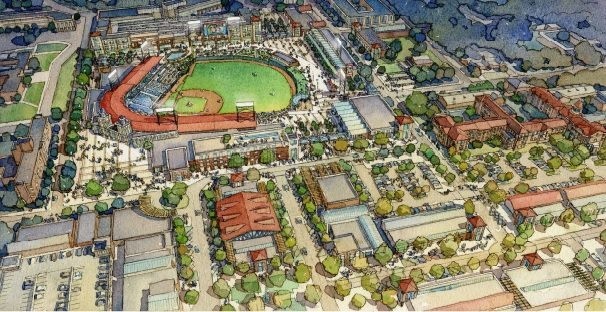
Right now, something very exciting is happening in the City of Columbia, yet many locals are unaware of it. Spirit Communications Park, home to the Columbia Fireflies, our minor league baseball team, has quickly become a Cola favorite. But did you know that the baseball stadium is just the beginning of a vast BullStreet District makeover? Columbia soon will have a small, quaint village within it, bringing adventure to the city’s downtown area. From restaurants and local shops to a large, beautiful public park, the 181-acre BullStreet Project is barreling full-steam ahead right before our eyes.
The State of South Carolina decided to sell the undeveloped BullStreet parcel years ago, but maintained a vision of a master developer to purchasing the entire S.C. Department of Mental Health campus with the promise of retaining many of its historic buildings. The one offer that came for the entire parcel was from Hughes Development Corporation, which is now set on building a one-of-a-kind neighborhood within the City of Columbia. Focused on preserving history and culture, the BullStreet Project is redefining the urban experience with a mix of residential, retail, restaurant, and recreational uses alongside and within the historical buildings. The undeveloped land is set to be transformed over a 20-year period into a district with walkable streets and a vast array of new experiences right in the heart of Columbia.
So, you ask, what is currently going on in this 20-year project? The Ensor Building, a historic building once used for research and as a morgue, will soon to be home to first brick-and-mortar Bone-In Barbeque restaurant. Bone-In Barbeque was started by Chef Scott Hall as a food truck, and has become a Columbia treasure that has been featured in GQ and Smithsonian magazines as well the Cooking Channel, Bravo and the Travel Channel. With roll-up garage doors and a large outdoor patio, Bone-In Barbeque will be a perfect spot for people to meet up for a beer and some southern BBQ. For more information on Bone-In Barbeque, Ensor, or other happenings on BullStreet, visit http://bullstreetsc.com/and https://boneinbarbeque.com/.
As someone who has lived in Columbia for almost a decade, the prospect of the completed BullStreet District not only entices me but makes me hopeful for Columbia’s future as an attractive destination for South Carolinians. So, residents of Columbia, get up, get out, and see all the many things that are going on right in your backyard!
|
|
|
|
|
|

There is no denying the fact that we now live in a digital world. Many of us are old enough to remember when telephones were attached to a cord in the wall, and we could only make and receive calls when inside our homes. Today, not only are our telephones completely portable and able to go with us wherever we go, but we can access the internet and perform just about any task with the help of a smart phone. In fact, today’s smart phones are over 120 million times more powerful than the NASA computers that sent the first astronauts to the moon and back in 1969.*
Think about all the advances that have occurred in our lifetime. Documents that had to be typed with carbon paper to make copies and mailed to its recipient can now be uploaded and emailed in a matter of seconds. Groceries can now be ordered through an app on your phone and delivered directly to your home. Kids in school are learning on electronic tablets instead of text books. In the not-so-distant future, our children or grandchildren will not know anything about a landline telephone, a record album or a world where you cannot access anyone immediately and get an immediate response.
It is highly likely that if you are reading this, then you have some type of social media account. Facebook, LinkedIn, YouTube, Snapchat and Instagram are some of the most popular services available on the internet. Many people have accounts with online photo hosting services to upload the photos from their phone or computer in order to save them or order printed copies. Internet shopping has become so popular that millions of people have online accounts with merchants for shopping online. Banks offer internet access to your bank account for online banking. Whether you realize it or not, you have an online digital presence, and that presence needs to be protected during your lifetime, and after you are gone.
We have all heard the warnings about using passwords that are hard to crack, and to protect our passwords from being obtained by thieves. Those are valid warnings, and I would urge you to protect yourselves from having your passwords hacked or stolen. You have an online identity, and you do not want that identity to be stolen. But what happens to that identity when you are gone? What happens to your Facebook page, or your photos that you have stored online, or the documents that you saved in a cloud based service? Those things do not just disappear when you die.
Do you want your Facebook page taken down when you are gone? Do you want it to continue on as a memorial to your life? Do you want those priceless photos or important documents to be available to your loved ones? These are questions for the digital age, and questions that many of us have not had to think about prior to this point in our lives. They are also issues that can be resolved as part of your estate plan. You can leave instructions as to how you want your online accounts to be handled. You can leave a list of your accounts and passwords in a safe place along with your Last Will and Testament, along with instructions for how you want the things you have protected during your lifetime to be dealt with upon your death.
We live in a digital world, and with that comes more information than ever before to be protected during our lifetime and distributed or disposed of when we are gone. Unless you plan ahead, your loved ones may not know where all of your information is stored, and may not be able to access or close accounts that contain your information or data. It is time to start treating our digital presence and digital possessions the same as we would our tangible possessions when planning for the future.
*For an interesting read on the technology that sent man to the moon as compared to today’s technology, check out this article:
https://www.zmescience.com/research/technology/smartphone-power-compared-to-apollo-432/
|